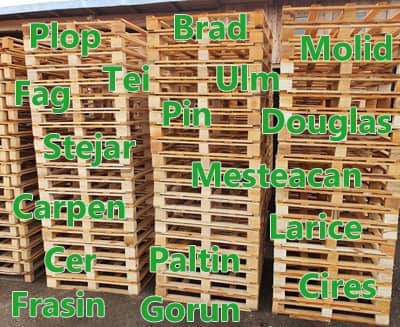
 Very often, when our customers order pallets or Euro pallets, the question arises of the species or type of wood from which the pallets or Euro pallets should be made.
The first thing to know is that the type of wood chosen for building a pallet or Euro pallet depends mainly on the design of the pallet, its structure and its strength. When a pallet or Euro pallet is designed from scratch and configured to achieve a certain strength and purpose, the type of wood required is chosen as well.
As far as the wood species is concerned, customers usually put us in one of three situations:
- the customer clearly asks for a specific type of wood;
- the customer asks us which type of wood is suitable for the pallets or Euro pallets used in their business;
- the customer does not ask for a specific type of wood and only cares that the pallets or Euro pallets do their job.
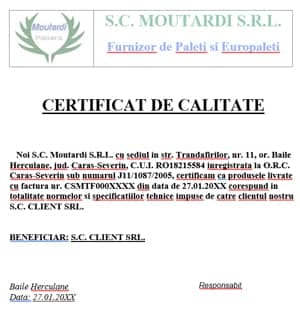 Situation 3 is certainly the ideal one, for the simple reason that the manufacturer is usually responsible for the goods it produces and for the quality and safe use of its product. The manufacturer has “tons” of experience with all the types of goods placed on pallets or Euro pallets and will immediately know what the customer needs. As the manufacturer, we also give the customer a certificate of quality and conformity assuring and guaranteeing that the pallet or Euro pallet meets their requirements, is of good quality and will do its job. The customer therefore has the document needed to return the goods if the pallets or Euro pallets delivered are not of good quality or do not meet their requirements. In short, the manufacturer saves the customer the headache of choosing the wood for the pallets or Euro pallets ordered and backs this up with a document.
In situation 1, we comply with the customer’s requirements. In some cases, when we believe we can bring improvements or price optimisations, we may suggest a different type of wood, leaving it to the customer to decide whether or not to take our suggestion into account.
In situation 2, we collect all the necessary information and make the requested pallet or Euro pallet from the species best suited to the customer’s activity and to the types of goods they place on pallets or Euro pallets.
When choosing the wood species, we generally take the following into account:
 when the customer first and foremost wants the lowest possible price for pallets or price for Euro pallets, poplar is always chosen, as it is the wood with the lowest log purchase price on the market. Pallets or Euro pallets made from this species are therefore cheaper too. Besides the price advantage, poplar is also very shock-resistant, elastic (when hit by machinery, forklifts, etc. it gives way but does not break) and very durable over time. One disadvantage (one of the few, in fact) is that in summer, in very hot weather, poplar can warp: the boards can bow and the flatness of the pallets/Euro pallets can suffer.
 for building materials in general, hardwood species are used – beech, oak, sessile oak, Turkey oak, hornbeam, etc. – because the pallets or Euro pallets must withstand very heavy loads. In this sector, one to two tonnes are usually placed on each pallet/Euro pallet, and in warehouses up to 3 pallets/Euro pallets can be stacked on top of each other. So the bottom pallet or Euro pallet may have to withstand loads of 5-6 tonnes. Softwoods, especially conifers (fir, pine, spruce, larch, Douglas fir), are not suitable here because they would give way under such loads. Poplar and linden can withstand them, but the thickness of the pallet or Euro pallet components must be 10-20% greater.
- for goods packed in cardboard boxes, as well as lighter goods, softwood species such as conifers, poplar and linden are used. Being soft, these species damage cardboard boxes much less during packing, handling or transport than hardwoods, which are much harder and can damage cardboard boxes much more quickly.
 where pallets or Euro pallets need to look good (especially when they are displayed in shops together with the goods on them), single-coloured, light wood species are used wherever possible, such as maple or fir, because they have a beautiful, very pleasant appearance. At the opposite end are species whose logs have two colours (such as beech or linden) or that are dark in colour (such as oak, sessile oak or cherry).
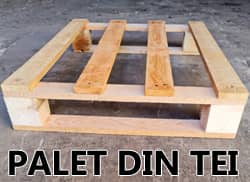
- The type of wood we prefer in the production of pallets and Euro pallets is linden.
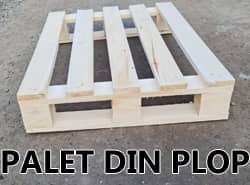 when the customer first and foremost wants the lowest possible
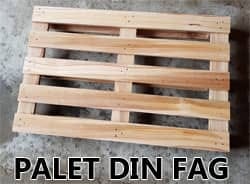 for building materials in general, hardwood species are used – beech, oak, sessile oak, Turkey oak, hornbeam, etc. – because the pallets or Euro pallets must withstand very heavy loads. In this sector, one to two tonnes are usually placed on each pallet/Euro pallet, and in warehouses up to 3 pallets/Euro pallets can be stacked on top of each other. So the bottom pallet or Euro pallet may have to withstand loads of 5-6 tonnes. Softwoods, especially conifers (fir, pine, spruce, larch, Douglas fir), are not suitable here because they would give way under such loads. Poplar and linden can withstand them, but the thickness of the
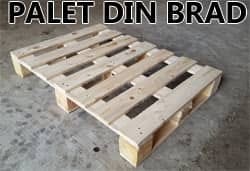 where pallets or Euro pallets need to look good (especially when they are displayed in shops together with the goods on them), single-coloured, light wood species are used wherever possible, such as maple or fir, because they have a beautiful, very pleasant appearance. At the opposite end are species whose logs have two colours (such as beech or linden) or that are dark in colour (such as oak, sessile oak or cherry).
Advantages of linden:
 although it is a softwood, it can withstand heavy loads just like hardwoods;
- its purchase price is much lower than that of hardwoods, yet it can be used in their place, so it can be offered as an alternative to customers looking for cheap pallets or Euro pallets;
- it looks better than most hardwoods and also better than poplar;
- in summer, when exposed to the sun and very high temperatures, it does not crack like beech or warp like poplar;
- it is abundant in Romania and easy to find and buy.
 although it is a softwood, it can withstand heavy loads just like hardwoods;
What is the difference between pallets and Euro pallets in terms of the type of wood they are made from:
Pallets in general can be made from any species, depending on the case, situation, use, type of goods placed on them, etc., exactly as detailed above.
Things are completely different for Euro pallets, which are subject to certain requirements and also have some practical limitations regarding the wood species used to produce them. So not all species can be used for Euro pallets.
Euro pallets are produced according to the EUR/EPAL and UIC 435 standards, which among other things require the use of only certain types of wood.
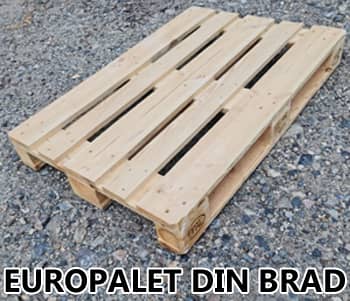 Although these standards also accept hardwoods such as beech, in practice Euro pallets made of hardwood are rarely or never found, for the simple reason that Euro pallets contain a very large volume of wood (they are very solid pallets), so when made of hardwood they are also very heavy, and companies avoid very heavy pallets. For example, a fir Euro pallet weighs 24-25 kg, while a beech one weighs 40-42 kg. A single employee can lift a fir Euro pallet, whereas a beech one requires two employees, which means extra labour costs. Also, when the cost of transporting goods is based on weight, companies will look for Euro pallets that are as light as possible and will prefer fir.
Conclusion:
Although in theory many aspects of the type of wood used to make pallets or Euro pallets could be discussed, in practice – apart from some limitations (occasional and very rare) related to quality standards or certain requirements regarding the look or use of the pallet – the vast majority of pallets on the market are made from the cheapest wood species available on that market, for the simple reason that pallets and Euro pallets are not furniture or building materials, which are subject to many additional requirements. Pallets and Euro pallets simply carry goods or make storing and distributing them easier, and in a competitive market economy goods must be as cheap as possible – so pallets and Euro pallets must, first and foremost, be cheap. That is why the wood species that is both abundant and cheap is usually the preferred one for making pallets or Euro pallets. In Romania, beech, poplar, linden and conifers are abundant, and most of the pallets and Euro pallets we produce are made from these species.