
Do you run a food business and are unsure which solutions to implement for safe transport? As pallet specialists, we can recommend a few simple, easy-to-implement solutions so you can keep doing a good job. Read on to see what characteristics a wooden pallet must have to be safe for transporting food, and why plastic pallets are becoming an increasingly popular alternative. You may also be interested in one-way pallets, which we discuss in this article too. The Moutardi team explains everything you want to know.
Wooden pallets – a solution even for modern transport
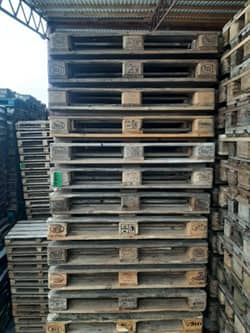
You may be surprised to learn that pallets have been used for transport and storage for a long time. They may not have looked exactly like today’s pallets, but the idea was the same: a rigid, flat base to support handling and storage. Of course, technology has since developed improved designs of wooden pallets.
What characteristics do wooden pallets have?
Here is what the wooden pallets we manufacture are like:
- Eco-friendly and sustainable – they are an option that does not harm the environment. Made from a renewable resource, they have a low environmental impact. When wooden pallets are no longer in good condition, they can be recycled or reused for other purposes.
- Attractive price – it is not just that we offer a good price: compared with other types of pallets, such as metal or plastic ones, wooden pallets remain an affordable option.
- Easy to repair – wood is versatile enough to allow easy repairs without high costs.
- High load capacity – heavy and bulky goods can be transported safely on wooden pallets.
What should wooden pallets used for transporting food be like?
In the food industry, transport is mostly done on wooden pallets, although plastic pallets are now also widely used. For pallets to be suitable for food transport, you need to check that they are in good condition and cannot affect the products. It is essential to comply with safety and handling rules.
For food products, certain types of treatment are also required to prevent contamination. These are:
- Heat treatment – which is also mandatory for wooden pallets used in international trade. The wood is treated at a high temperature to destroy any insects and pests. A heat-treated pallet bears the HT mark, just like our wooden pallets,
- No potentially toxic chemical treatments must be used. It is essential that no chemicals are used to treat wooden pallets intended for food transport, as they could contaminate the products. For example, methyl bromide treatment is banned in the food industry.
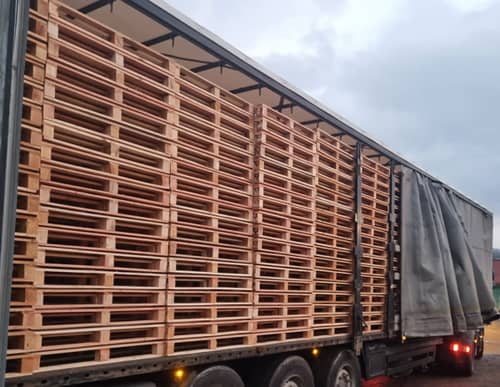
- They must be cleaned responsibly. Any wooden pallet used for transporting or storing food must be free of mould, chemicals, oil or any other kind of dirt. That is why companies often choose one-way pallets that can be kept cleaner, because they are not reused after being used in other industries – they are new and clean.
Plastic pallets – the solution you were looking for?
Plastic pallets are considered more water-resistant because they do not absorb it, and they are lighter. These features make them a good choice for the food sector. They are also easy to clean. However, they are more expensive than wooden pallets and, because of the material, more polluting for the environment.
You choose what to use for your business, and we are by your side for any type of pallet you are interested in. If you do not want a standard size, we can help with made-to-order products. Moutardi should be your answer when you need pallets for the food industry. Contact us!