We talk a lot about sustainability, an important factor in the development of any business. It has become a necessity, including when it comes to the materials used to pack and transport goods. Have you ever wondered why wooden pallets are the best option, rather than pallets made of other materials such as plastic or metal? Because they are the very definition of balance between efficiency and logistics. Because they have a low environmental impact. We explain this in more detail below.
Wood, a practical choice
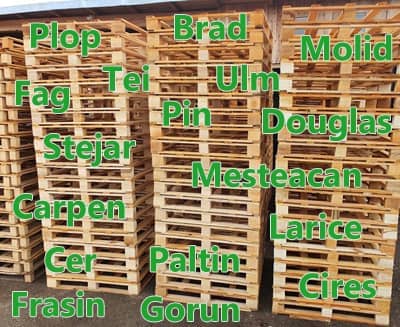
Wood is a renewable resource and, unlike materials such as plastic or metal, it is a natural resource. It does not require complex industrial processes to obtain.
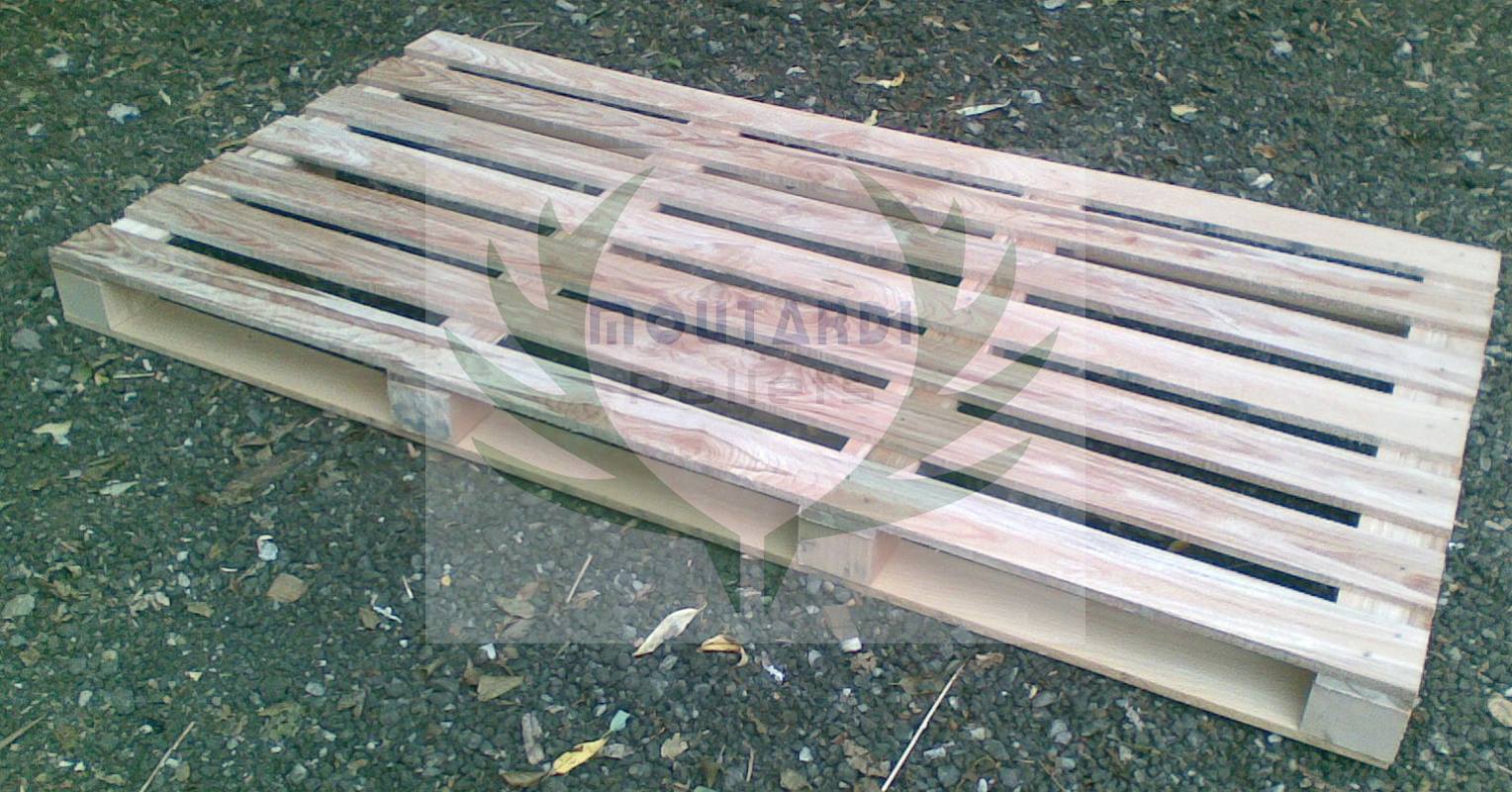
To make our pallets we use medium-grade wood sourced from responsibly managed forests. When it comes to durability, such wooden pallets have the advantage of being heat treated. Heat treatment is a factor that determines the strength of the product, and even after long use – after dozens of trips through logistics flows – damaged pallets can be repaired and reused. Metal and plastic pallets, by contrast, need to be replaced immediately.
Not to be confused with one-way pallets!
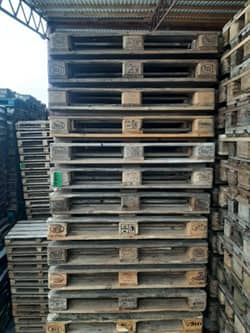
At Moutardi we care about offering a wide range of products to suit the needs of a broad audience. That is why, in addition to our production of Euro pallets and pallets, you will also find one-way pallets. These are lighter-grade products designed for a single use.
Heat treatment improves the quality of the final product – about the RO-CS-26 HT certification
The heat treatment process complies with the international standard. Moutardi is authorised to carry out heat treatment, as confirmed by the RO-CS-26 HT mark. Heating the wood to 56 degrees Celsius for at least 30 minutes creates the right conditions to eliminate insects, even in their early stages – eggs or larvae that are hard to spot with the naked eye. This also prevents various diseases and stops factors that can damage the wood.
Heat-treated pallets are the standard for exports, so in the end we become logistics partners. Many European countries do not accept shipments of goods that are not on heat-treated pallets, which they require in order to protect their ecosystems.
Advantages:
- Guaranteed access to international markets.
- Compliance with global phytosanitary regulations.
- A responsible brand image. In turn, as a transport company, you maintain your professional standards by using compliant products.
Optimal price/quality ratio
You also benefit from being able to order directly from the manufacturer, so you get fair costs. You can order pallets in the sizes you need. One conclusion from this point of view is that buying wooden pallets means a competitive and advantageous price compared with pallets made of other materials. The cost can be recovered quite quickly.
| Criterion | Wooden pallet | Plastic pallet | Metal pallet |
| Cost | Affordable | High | High |
| Sustainability | Renewable, biodegradable, recyclable | Petroleum-based, limited recycling | High resource consumption in production |
| Service life | Medium (reusable for 5 to 10 years) | Long (moisture-resistant) | Very long |
| Weight | Medium | Light | Heavy |
| Moisture resistance | Medium (if not properly treated or dried) | High | High |
| Load capacity | Good | Medium | High |
| Accepted for export | Yes, if heat treated (HT) | No treatment required, but subject to inspection | Yes |
| Final environmental impact | Minimal – can be burned, recycled or composted | Polluting | Recyclable, but energy-intensive |
| Recommended for | General transport, export, various storage needs | Food industry, pharma, in-house logistics | Heavy loads, heavy industry, special warehouses |
So sustainability is not just a term that sounds good – it is about practical choices for your business.